
A well-built client questionnaire template saves you from the most common project killer: starting work before you actually understand what the client wants. The best free, customizable options cover business context, goals, budget, timeline, and stakeholder details in a single structured form, so your kickoff meeting focuses on strategy rather than basic fact-finding.
Here are three template types that work well for freelancers and small businesses:
- New client onboarding questionnaire: Covers business background, project goals, target audience, budget range, and key milestones. Pairs naturally with a signed contract and syncs responses to your CRM or project tool.
- Customer information template: Collects contact details, communication preferences, and account information. Works for both B2B and B2C clients, with conditional logic that shows company fields only when relevant.
- Lead capture form: Qualifies prospects before a sales call by gathering company size, pain points, decision-making authority, and timeline. Keeps your pipeline clean without overwhelming visitors.
All three formats are freely available and customizable. The real advantage comes when you connect them to your broader onboarding workflow, whether that means a project management tool, a CRM, or a client portal that handles contracts, payments, and file sharing in one place.
What questions should a client questionnaire template include?
The goal is to prevent onboarding delays by collecting everything your team needs before the first meeting. Organize questions into these categories:
- Business overview: Company name, industry, size, and how long they have been operating.
- Primary goals: What does success look like for this project? What problem are they solving?
- Target audience: Who are their customers, and what do those customers care about?
- Budget: A range is fine. Knowing whether a client is working with $2,000 or $20,000 changes everything about your approach.
- Timeline: Hard deadlines, preferred launch dates, and any external dependencies.
- Stakeholders: Who approves decisions, and who else will be involved in reviews?
- Previous experience: Have they worked with a freelancer or agency on this before? What went well or poorly?
Add a brief privacy notice near the top. Transparency about data use builds trust and keeps you compliant with CCPA requirements that apply to US-based businesses collecting client information.
Aim for 10–15 questions that take under 10 minutes to complete. That length gives you real context without feeling like homework to the client.

How do you create and customize a client questionnaire for your business?

Start by choosing a form platform that supports conditional logic and mobile-friendly layouts. Conversational form design, where one question appears at a time, reduces cognitive load and keeps clients moving through the form rather than abandoning it midway.
Pro Tip: Use conditional logic to route questions based on earlier answers. A startup founder and an enterprise procurement lead have very different contexts, and your questionnaire should reflect that without making either feel like they are answering irrelevant questions.
A few practical steps to build your own:
- Keep it short. Keeping forms short improves completion rates; longer forms tend to reduce completion significantly. Prioritize the questions that directly affect your work.
- Add your branding. Logo, colors, and a friendly intro message signal professionalism before the project even starts.
- Set up integrations. Connect responses to your CRM, Google Sheets, or project tool so your whole team has context before the first call.
- Send it at the right moment. Immediately after contract signing is the best time. Include a short note explaining that their answers will shape the kickoff agenda.
For client communication best practices that complement your questionnaire workflow, a dedicated client inbox keeps responses organized and prevents important details from getting buried in a general email thread.
How does a client portal take your onboarding further?
A questionnaire collects the information. A client portal puts it to work. Realclient combines questionnaire intake with e-signatures, invoicing, file sharing, and project milestone tracking inside a single branded workspace, so clients never have to dig through scattered emails to find what they need.
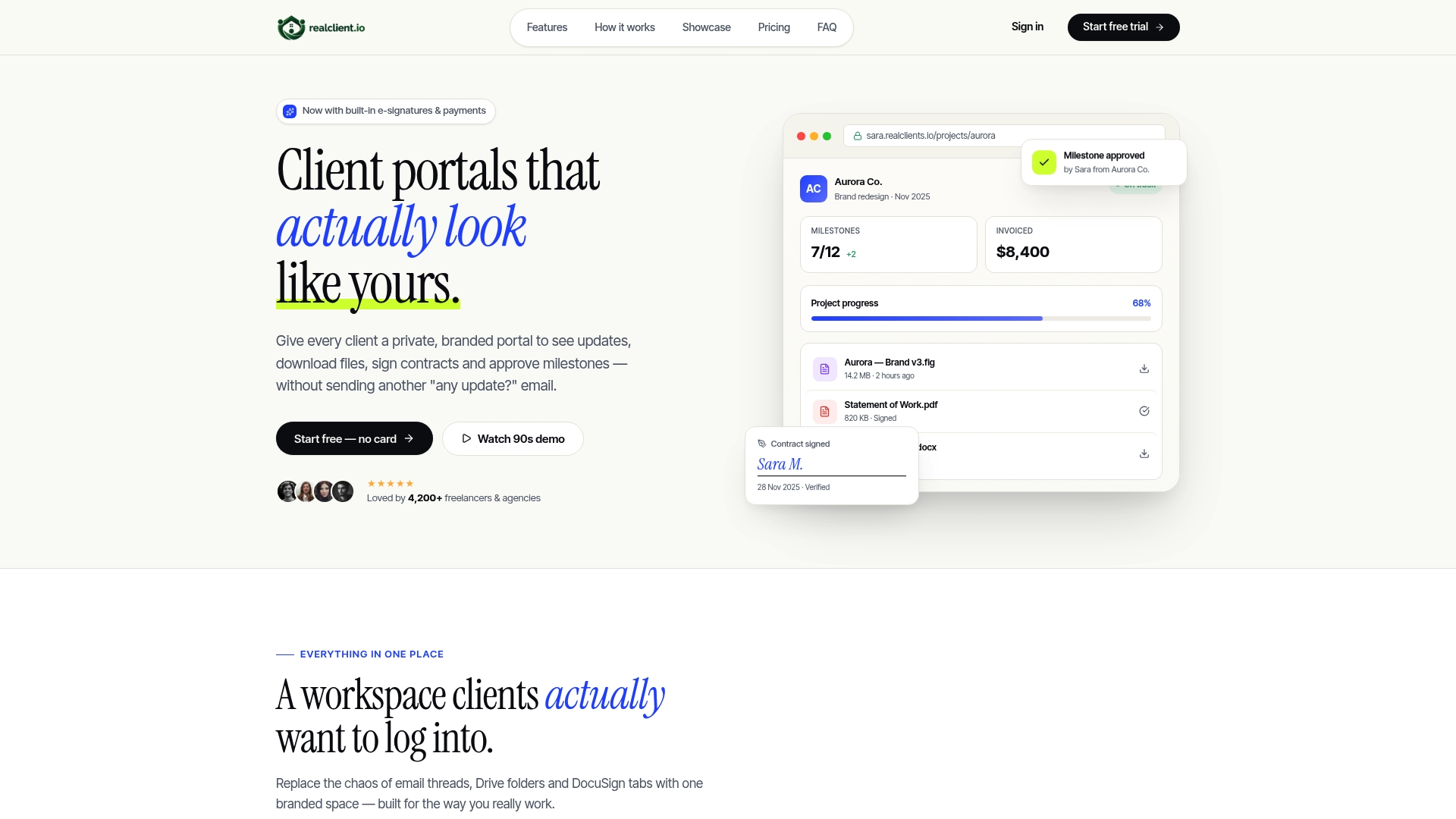
The practical benefits show up fast:
- Contracts get signed and payments get processed in the same place clients submit their onboarding details.
- File sharing with version history replaces the back-and-forth of email attachments.
- Bank-grade security and granular permissions protect sensitive client data, which matters when you are collecting budget figures and business strategy details.
Freelancers and studios using Realclient have invoiced over $48 million through their portals, a figure that reflects both the volume of work running through the platform and the trust clients place in the process. You can explore Realclient's pricing to find a plan that fits your client load, with a free tier available for getting started.
Key Takeaways
A structured client questionnaire template, sent immediately after contract signing and connected to your project tools, is the single most effective way to eliminate onboarding confusion and start every project on solid ground.
| Point | Details |
|---|---|
| Cover six core categories | Include business overview, goals, audience, budget, timeline, and stakeholders in every questionnaire. |
| Keep it to 10–15 questions | Forms in this range take under 10 minutes and collect meaningful context without burdening clients. |
| Use conditional logic | Dynamic question paths reduce form abandonment and make the experience feel consultative. |
| Send right after contract signing | Early collection shapes your kickoff meeting and signals professionalism from day one. |
| Integrate with a client portal | Combining questionnaires with e-signatures, payments, and file sharing removes friction from the full onboarding process. |