
What actually works when requesting payment from clients
The most effective way to ask a client for payment is simple: state the invoice number, the exact amount owed, and the due date, then include a direct payment link. No apologies, no vague language, no emotional framing. You're not asking for a favor. You're restating an agreement both parties already signed.
Here's what every payment request should include:
- Invoice number and exact total so there's no ambiguity about which payment you mean
- Due date or days overdue stated plainly in the subject line and opening sentence
- A direct payment link or clear instructions for how to pay (PayPal, bank transfer, card)
- A copy of the original invoice attached to every message, every time
- One line inviting questions so disputes surface early rather than stall payment silently
Keep the message short. A concise, factual request gets read. A three-paragraph email gets skimmed or ignored.
Table of Contents
- When and how often should you send payment reminders?
- How to write payment request emails that actually get results
- What to do when clients still haven't paid after multiple reminders
- How Realclient makes payment requests faster and less stressful
- Set payment terms before work starts
- Using incentives and penalties to get paid on time
- Realclient puts your payment workflow on autopilot
- Key Takeaways
When and how often should you send payment reminders?
Timing matters more than most freelancers realize. Send your first overdue reminder 3–5 days after the due date, while the invoice is still fresh in your client's mind. Waiting two weeks to follow up weakens your position and makes the conversation harder.
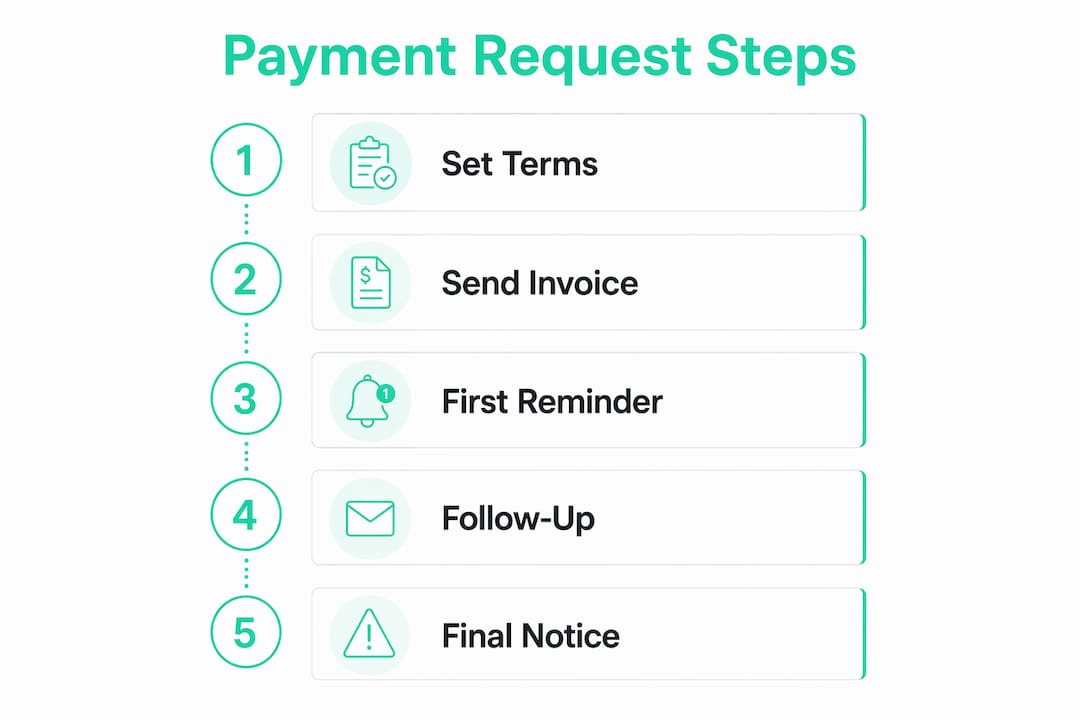
A structured reminder schedule keeps things professional and removes the guesswork:
- Before the due date (5–7 days out): a friendly heads-up that payment is approaching
- On the due date: a brief, neutral reminder that today is the day
- 3–5 days late: the first overdue reminder
- One week late: a firmer follow-up noting the invoice is overdue
- Two weeks late: a direct message referencing late fees and next steps per your contract
Consistency is the key. When clients see reminders arrive on a predictable schedule, it signals that you run a professional operation, not one that forgets to follow up.
Pro Tip: Automate your reminder schedule inside a client portal. Automated reminders go out on time, every time, without you having to remember or feel awkward about sending them.
How to write payment request emails that actually get results

Your tone sets the outcome. Treat every payment request as a neutral status update on a pre-agreed transaction, not a personal ask. Drop phrases like "sorry to bother you" or "I hate to ask." They reduce your authority and signal that the request is negotiable.
Every email should follow this structure:
- Subject line: include the invoice number and status ("Invoice #1042 — Payment Due Today" or "Invoice #1042 — 7 Days Overdue")
- Opening line: state the fact directly, no warm-up paragraph
- Body: amount owed, due date or days overdue, payment method
- Attachment: the invoice, every single time
- Closing: one sentence offering to answer questions or resolve disputes
For partial payments or genuine hardship cases, offer a payment plan in writing. It keeps cash moving and preserves the relationship.
Here's a template for a one-week overdue notice you can adapt today:
Subject: Invoice #1042 — Payment now 7 days overdue
Hi [Client Name],
Invoice #1042 for $[amount] was due on [date] and remains unpaid. I've reattached it here for your convenience. Please arrange payment by [new date] via [payment method/link]. If there's an issue on your end, reply and we can work through it. Per our agreement, a late fee applies after [X] days.
Escalate firmness gradually across follow-ups. The first reminder is warm. The second is direct. The third is firm and references contract terms. Never accusatory, always factual.
What to do when clients still haven't paid after multiple reminders
When reminders stop working, the approach needs to shift. Issue a formal final notice with a hard deadline of 5–7 business days for payment. Be explicit about what happens next: work pauses, late fees apply, or the account moves to collections, depending on what your contract specifies.
- Send a final written notice referencing the original contract terms and the total now owed including any late fees
- Pick up the phone. A calm, direct call often surfaces the real issue faster than another email thread. Aim to secure a firm payment commitment with a specific date
- Pause ongoing work until the account is current, and tell the client you're doing so
- Document everything: dates, amounts, communications, and any commitments the client made verbally or in writing
- Know your legal options. In the US, you can charge interest on overdue invoices if your contract specifies a rate. For larger amounts, small claims court is an option, and many states allow you to recover court costs
If you work with freelancers yourself, vetting clients before engagement can reduce payment disputes significantly on both sides of the relationship.
How Realclient makes payment requests faster and less stressful
Realclient's client portal platform puts invoicing, automated reminders, messaging, and payment processing inside one branded workspace. You send an invoice, the client gets a reminder on schedule, and they pay through a direct link without leaving the portal.
- Automated reminders fire at the intervals you set, so you never have to manually track who owes what
- Stripe and PayPal integration means clients can pay immediately from the invoice, reducing the friction that stalls payment
- Milestone-based invoicing ties payments to project deliverables, so expectations are clear from day one
- All communication stays in one place, creating a documented record of every message, approval, and payment
$48 million invoiced through Realclient portals in the past year — a clear signal that freelancers and agencies are getting paid faster when billing lives inside a structured client workspace.
Realclient's CRM with payment processing capabilities mean you're not stitching together separate tools for invoicing, reminders, and client communication. Everything runs from one place, under your brand.
Set payment terms before work starts
The easiest payment conversation is the one you never have to have. Before any project kicks off, put your payment terms in writing and get a signature. This transforms every future payment request from a negotiation into a simple reminder of what was already agreed.
Your contract or engagement letter should spell out: payment due dates (net 7, net 15, or net 30), accepted payment methods, late fee rates, and what happens if an invoice goes unpaid. Clear written terms reduce friction at collection time because neither party is surprised. Consider requiring a deposit upfront for new clients or large projects. It filters out low-commitment clients and limits your exposure if payment becomes an issue later.
Using incentives and penalties to get paid on time
Two levers move clients to pay faster: the carrot and the stick. Early payment discounts (typically 1–2% off for payment within 5–10 days) work well with clients who are price-sensitive and organized. Late fees (commonly 1.5–2% per month on the outstanding balance) work better for clients who need a financial reason to prioritize your invoice over others.
Both need to be in your contract before you can enforce them. Announcing a late fee after the fact rarely holds up and damages trust. State the rate, the trigger date, and the calculation method in plain language when you onboard a client, not after they've missed a deadline.
Realclient puts your payment workflow on autopilot
Chasing payments manually is time you're not spending on client work. Realclient gives freelancers, agencies, and small businesses a branded portal where invoicing, reminders, contracts, and payments all live together.
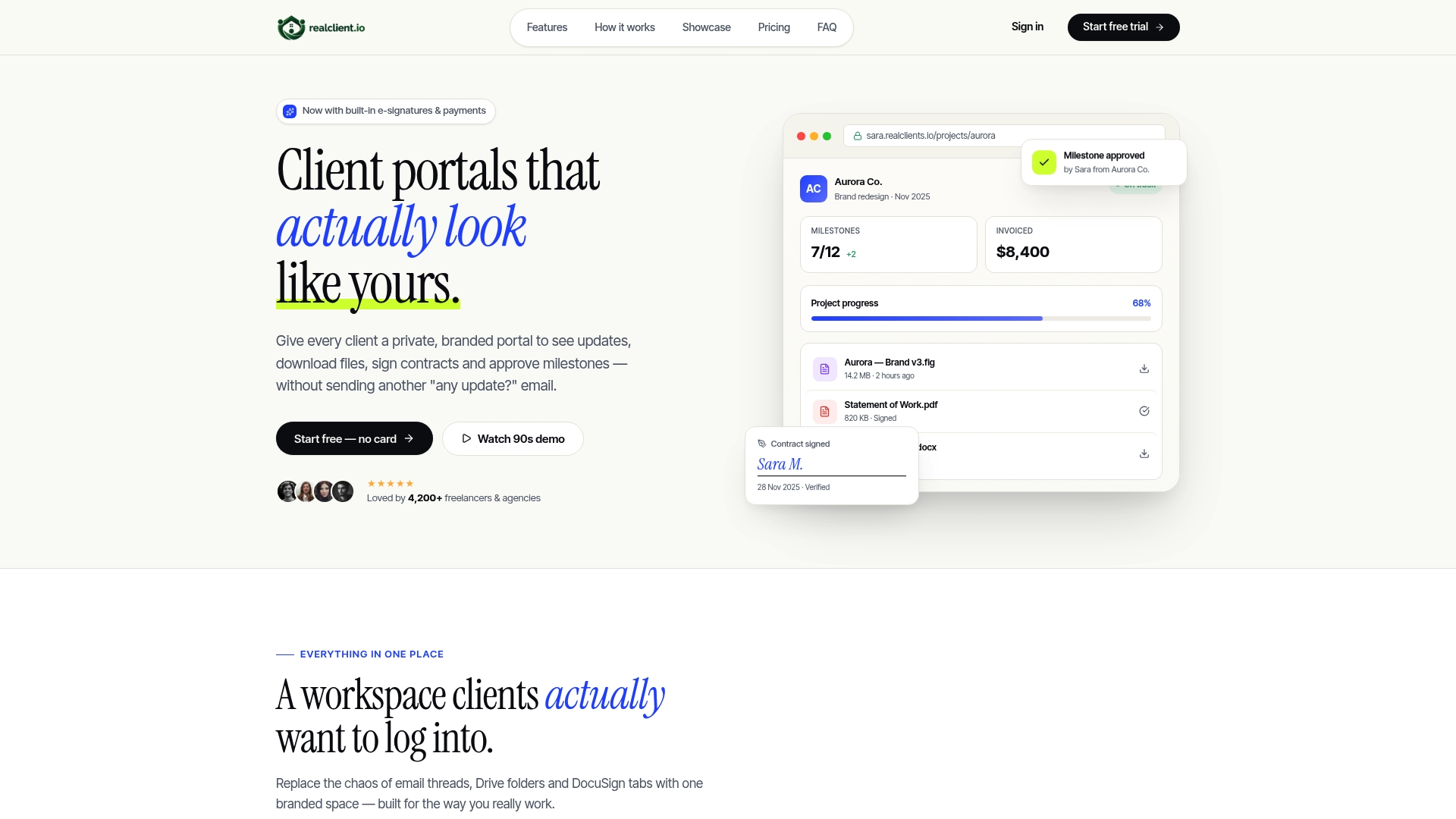
Clients get a clean, professional experience. You get paid faster, with less back-and-forth. Realclient has processed over $48 million in invoices through its portals, and the platform's Stripe and PayPal integrations mean your clients can pay in seconds from any device. There's a free plan to start, and paid tiers scale as your client base grows. See what a fully integrated payment workflow looks like at realclient.io.
Key Takeaways
Asking for payment professionally means combining clear invoice details, a structured reminder schedule, and firm contract terms from the start.
| Point | Details |
|---|---|
| Include the essentials every time | Every request needs the invoice number, exact amount, due date, and a direct payment link. |
| Follow a reminder schedule | Send reminders before the due date, on the due date, one week late, and two weeks late. |
| Skip the apologies | Treat payment requests as neutral status updates on a pre-agreed deal, not personal asks. |
| Escalate deliberately | After reminders fail, issue a formal final notice with a 5–7 business day deadline for payment, then call. |
| Realclient automates the process | Realclient's portal handles invoicing, automated reminders, and Stripe/PayPal payments in one branded workspace, with over $48 million invoiced through its portals last year. |