
An SEO contract agreement is a legally binding document that defines the responsibilities, deliverables, payment terms, and protections for both the SEO provider and the client. Without one, even the most promising SEO engagement can collapse into disputes over scope, timelines, or ownership. A well-written SEO service agreement sets expectations from day one and gives both parties a clear path forward. Realclient's client portal platform processes contracts and payments in one place, which means freelancers and agencies can manage their agreements without chasing scattered emails or documents.
1. What every SEO contract agreement must include

The foundation of any contract for SEO services is a clearly defined scope of work. Defining deliverables as outputs rather than processes prevents scope creep and client misunderstandings. Writing "10 optimized blog posts per month" is far stronger than writing "keyword research and content strategy." Clients know exactly what they are paying for, and providers know exactly what they must deliver.
Beyond scope, every digital marketing contract needs these core components:
- Scope of work: Specific, measurable deliverables listed by output, not activity
- Contract duration: Most SEO engagements run 6–12 months initially, with a 3-month minimum before month-to-month terms apply
- Payment terms: Net 15 or net 30 invoicing is standard, with a 5–15 day grace period before work suspension
- Performance metrics: KPIs such as organic traffic, conversion rates, and keyword rankings replace vague promises
- Intellectual property: Clients own all content, strategy documents, and data created during the engagement
- Termination clause: Most SEO contracts require 30 days' notice for cancellation, with defined exit conditions
Pro Tip: Add a "prohibited tactics" clause that explicitly bans black-hat link building and other manipulative techniques. Defining prohibited tactics protects your client's assets and builds trust from the start.
2. Common pitfalls and red flags in SEO agreements
Most SEO contract disputes trace back to the same handful of problems. Knowing them in advance lets you negotiate from a position of strength.
"Guaranteed rankings create liability traps due to changing search algorithms. Reputable agencies avoid guaranteed ranking promises and focus on measurable KPI progress instead. Any contract that promises a specific Google ranking is a red flag, not a selling point."
Watch out for these common pitfalls:
- Vague scope: Phrases like "ongoing SEO support" invite disputes. Every deliverable needs a number and a deadline.
- Ranking guarantees: No provider can guarantee a Google position. Contracts that promise one expose both parties to legal and financial risk.
- Excessive lock-in periods: Contracts longer than 12 months without a reasonable exit clause trap clients in underperforming relationships.
- Ambiguous IP clauses: If the contract does not state who owns the content and data, the agency may retain control after the engagement ends.
- No change-order process: Any work outside the original scope should require a written amendment. Without this, providers work for free or clients face surprise invoices.
- Weak payment protection: A contract without a clear suspension policy leaves providers vulnerable to non-payment with no recourse.
The most dangerous contracts combine vague scope with long lock-in periods. You end up doing more work than agreed, for longer than planned, with no clear way out.
3. SEO contract billing models and how to choose
The billing model you choose shapes the entire client relationship. Each structure carries different risks and rewards for both sides.
| Billing model | Best for | Key consideration |
|---|---|---|
| Monthly retainer | Ongoing SEO campaigns | Predictable cash flow; typical duration is 6–12 months |
| Project-based | One-time audits or migrations | Fixed fee requires a very precise scope |
| Hourly | Consulting or ad hoc support | Harder to budget; works best for small, defined tasks |
| Performance-based | Results-driven clients | Ties payment to KPIs; requires clear metric definitions |
| Hybrid retainer + performance | Long-term agency relationships | Aligns interests and reduces risk for both parties |
Hybrid billing models are the fastest-growing structure in SEO contracts. They combine a fixed monthly retainer with bonus payments tied to KPI improvements. This model works because the provider earns a reliable base income while the client pays more only when results arrive.
Pro Tip: If you use a performance-based component, define the KPIs in the contract itself. "Organic traffic increase of 20% over baseline" is enforceable. "Improved rankings" is not.
For freelancers managing multiple clients, payment processing tools that integrate directly with your contract workflow save significant time and reduce late payment risk.
4. How to draft a fair and clear SEO service agreement
A strong SEO agreement template follows a logical sequence from scope to exit. Each section builds on the last, leaving no room for ambiguity.
-
Write a detailed scope of work first. List every deliverable with a quantity and a timeline. "Four technical audits per year" is a deliverable. "Technical SEO support" is not.
-
Set a payment schedule with consequences. Define invoice dates, due dates, and the exact grace period before work suspension. Standard practice is net 15 or net 30, with suspension rights after 5–15 days unpaid.
-
Anchor timelines to reality. Meaningful ranking improvements take 3–6 months. Your contract should state this explicitly to prevent early termination demands based on unrealistic expectations.
-
Use KPI-based objectives. Replace vague language like "improve your SEO" with specific targets: organic sessions, domain authority growth, or conversion rate from organic traffic.
-
Clarify intellectual property ownership. Clients should own all content, strategy documents, and data created during the engagement. Agencies may retain limited rights for portfolio use only, and the contract should say so explicitly.
-
Specify account access. List every platform the provider will access, including Google Search Console, Google Analytics, and the client's CMS. Define what access level is granted and what happens to that access at contract end.
-
Add confidentiality and liability clauses. These protect both parties. The provider agrees not to share client data. The client agrees not to hold the provider liable for algorithm changes outside their control.
-
Include a dispute resolution process. Specify whether disputes go to mediation, arbitration, or a specific jurisdiction's courts. This one clause prevents expensive litigation over minor disagreements.
-
Set termination rights for both sides. Either party should be able to exit with 30 days' written notice after the initial term. Define what happens to outstanding invoices and deliverables at termination.
Pro Tip: Review your freelance SEO terms with a contract attorney at least once. A single legal review costs far less than one disputed invoice or a scope creep situation that drags on for months.
For agencies managing multiple active contracts, client management platforms that centralize contract storage and status tracking reduce the risk of missing renewal dates or termination windows.
Key Takeaways
A strong SEO contract agreement defines deliverables as measurable outputs, anchors timelines to realistic 3–6 month expectations, and protects both parties with clear IP, payment, and termination terms.
| Point | Details |
|---|---|
| Define deliverables as outputs | Write specific quantities like "10 blog posts" instead of vague activities like "content strategy." |
| Avoid ranking guarantees | Focus contracts on KPIs like traffic and conversions, not specific Google positions. |
| Use net 15 or net 30 payment terms | Include a 5–15 day grace period and explicit work suspension rights for unpaid invoices. |
| Anchor timelines to 3–6 months | State in the contract that meaningful SEO results take at least 3 months to appear. |
| Clarify IP ownership upfront | Clients own all content and data; agencies retain only limited portfolio rights. |
Why most SEO contracts fail before the work even starts
The contracts I see fail most often share one trait: they were written to close the deal, not to manage the relationship. Both sides sign quickly, skip the details, and assume good faith will cover the gaps. It never does.
The shift I have watched gain traction in 2026 is the move toward KPI-driven contracts without any ranking guarantees. Clients are more educated now. They understand that Google's algorithm changes weekly and that no provider controls it. What they want instead is proof of progress: traffic trends, conversion data, and clear reporting cycles. Contracts that build this in from the start create far less friction at the 90-day mark.
Hybrid billing is the other change worth paying attention to. A fixed retainer plus a performance bonus aligns both sides toward the same goal. The provider is not just billing hours. The client is not just hoping for results. Both parties have skin in the game.
The one clause most freelancers skip is the change-order process. Scope creep is the silent killer of profitable SEO engagements. A single sentence requiring written approval for out-of-scope work protects your time and your income. Add it to every contract you sign.
— Real
How Realclient helps you manage SEO contracts with confidence
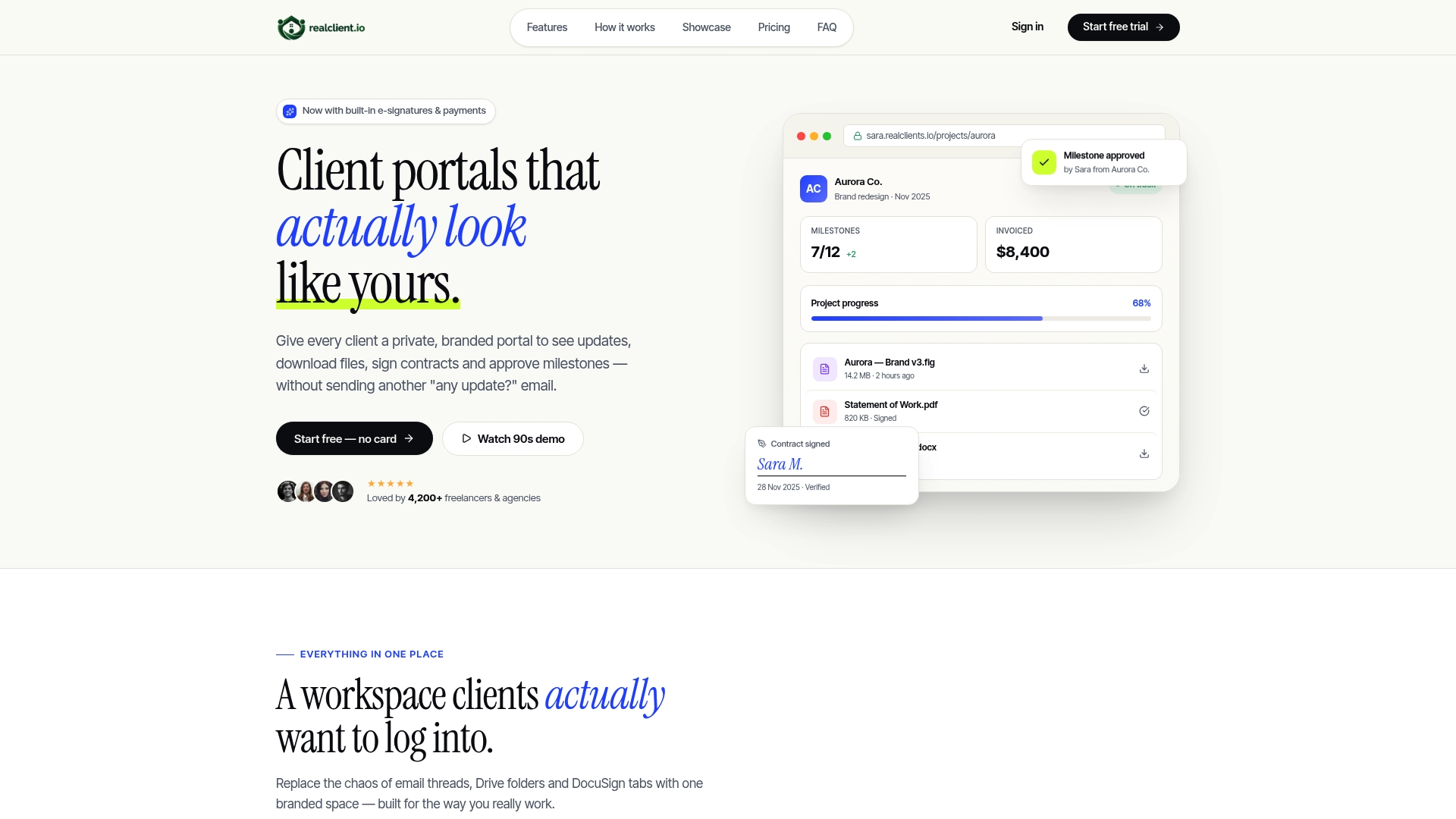
Realclient gives freelancers and agencies a private, branded client portal where contracts, project updates, and payments live in one place. You can send contracts for e-signature, track invoice status, and share deliverables without juggling multiple tools or chasing clients through email threads. Over $48 million has been invoiced through Realclient portals, which reflects the trust independent professionals place in the platform. If you want to present your SEO service agreements more professionally and get paid faster, explore Realclient's client portals to see how the platform fits your workflow. You can also review Realclient's pricing plans to find the right tier for your agency or freelance practice.
FAQ
What is an SEO contract agreement?
An SEO contract agreement is a legally binding document between an SEO provider and a client that defines the scope of work, deliverables, payment terms, and protections for both parties.
How long should an SEO contract last?
Most SEO contracts run for an initial term of 6–12 months, with a 3-month minimum, because meaningful ranking improvements typically take 3–6 months to appear.
Can an SEO agency guarantee rankings in a contract?
No reputable agency guarantees specific rankings. Guaranteed rankings create legal liability because search algorithm changes are outside any provider's control, so contracts should focus on measurable KPIs instead.
Who owns the content created during an SEO engagement?
The client owns all content, strategy documents, and data created during the engagement. Agencies may retain limited rights for portfolio use only, and the contract should state this explicitly.
What payment terms are standard in a contract for SEO services?
Net 15 or net 30 invoicing is standard, with a grace period of 5–15 days before the provider can suspend work for non-payment without liability for any resulting ranking drops.