
Recurring invoices are invoices automatically generated and sent to the same client on a fixed schedule, saving you the monthly ritual of manual billing while keeping cash flow predictable. Before you create your first schedule, confirm five things: a complete customer record with billing address and contact, a reusable invoice template with clear line items, a defined schedule (frequency, start date, and end condition), a payment path (a pay-now link or saved autopay method), and the accounting code each line item maps to.
Before you create any recurring schedule, confirm you have:
- A verified customer record with current billing address and email
- A signed contract or agreement that authorizes recurring charges
- A finalized invoice template with line items, billing period label, and due terms
- A payment method on file or a pay-now link ready to attach
- A defined end condition: a fixed number of invoices, an end date, or a "until canceled" clause
Key Takeaways
Recurring invoices save time and stabilize cash flow when you build them on a solid template, a clear schedule, and a documented dunning plan.
| Point | Details |
|---|---|
| Confirm five elements first | Customer record, template, schedule, payment path, and end condition must be set before you create any recurring schedule. |
| Match the tool to the workflow | Use auto-send for stable retainers; generate-for-review for variable amounts; reserve auto-charge for high-volume, low-touch billing. |
| Handle failed payments with a ladder | Retry automatically, then email the client, then reach out directly — document every step and flag accounts past 30 days. |
| Get the accounting right | Record AR when the invoice is sent; use deferred revenue for prepaid arrangements; consult your accountant on ASC 606 treatment. |
| Realclient for all-in-one billing | Realclient's portal combines invoice templates, pay-now links, e-signatures, and client messaging in one branded workspace. |
Table of Contents
- What do recurring invoices mean, and when are they the right choice?
- Why recurring invoices pay off for small businesses and freelancers
- How do recurring invoices differ from subscriptions, auto-charge billing, and sales receipts?
- How to set up recurring invoices: a platform-agnostic checklist
- What should you look for in QuickBooks, Stripe, and other billing tools?
- How do you manage recurring invoices when things go wrong?
- U.S. accounting and tax considerations for recurring invoices
- Security and compliance: how do you protect client payment data?
- How Realclient simplifies recurring invoices for freelancers and small agencies
- The rollout plan that actually works for busy small teams
- One tool to handle invoices, payments, signatures, and client communication
- Sources
What do recurring invoices mean, and when are they the right choice?
A recurring invoice is an invoice sent to the same customer at regular intervals using a stored template and schedule. Think of a freelance designer billing a marketing agency $3,500 every month for ongoing brand work: the invoice details stay the same, only the billing period and invoice number change.
The clearest signal that recurring invoices fit your business: your client owes the same amount on the same schedule, and both of you expect a paper (or digital) record of each charge. Retainers, monthly maintenance plans, rent, and membership fees all qualify.
Recurring invoices work best when the amount and period are stable. If you run a monthly SEO retainer, a quarterly bookkeeping package, or a flat-rate property management fee, a recurring schedule removes the manual step entirely.
When recurring invoices are the wrong tool:
- Milestone-based projects where each invoice amount depends on work completed
- One-off or highly variable engagements where scope changes every billing cycle
- Usage-based billing where the charge depends on consumption data you collect after the period closes
Pro Tip: If your retainer has a fixed base fee plus variable add-ons, set up a recurring invoice for the base and issue a separate manual invoice for the variable portion each month. Mixing them into one recurring template creates disputes.
Why recurring invoices pay off for small businesses and freelancers
The most direct benefit is time. Every manual invoice you eliminate is several minutes of formatting, attaching, and following up that you get back. Multiply that across multiple steady clients and the savings add up fast.
Cash flow predictability is the second gain. When you know exactly which invoices go out on which dates, your receivables become a forecast, not a guess. You can watch your days-to-paid metric per client and spot a slow payer before they become a problem.
Operational benefits that compound over time:
- Fewer data-entry errors because the template is built once and reused
- Automated reminders reduce the awkward "just checking in" emails
- Simpler bookkeeping because each recurring line item maps to a consistent account code
- Fewer disputes because the billing period is labeled on every invoice
Statistic callout: Automated billing systems combine scheduling, payment collection, retry logic, and dunning to reduce manual work and improve cash flow — Stripe's own documentation on automated billing highlights that these systems handle the full collection cycle without manual intervention at each step.
The operational case is straightforward: fewer manual steps means fewer mistakes, and fewer mistakes means fewer conversations about why an invoice looks wrong.
How do recurring invoices differ from subscriptions, auto-charge billing, and sales receipts?
These four terms describe different workflows, and choosing the wrong one creates accounting headaches.
A recurring invoice sends a document requesting payment. The client still has to act: click a pay-now link, send a check, or initiate a transfer. A recurring billing or auto-charge model stores the client's card or bank details and pulls the payment automatically without sending a separate invoice first. A subscription is a productized recurring relationship, often with a customer-facing portal and self-service options. A sales receipt records a payment that has already been made, with no outstanding balance.
The distinction between invoicing and auto-charge matters for collection timing and client expectations. B2B clients often prefer receiving an invoice they can approve before payment clears, especially when they need to match it to a purchase order.
Accounting implications at a glance:
- Recurring invoice: creates an accounts-receivable entry when sent; revenue recognized when the service is delivered
- Auto-charge: payment collected before or at the same time as service delivery; may create a deferred revenue liability if collected in advance
- Sales receipt: records immediate payment; no AR entry needed
- Subscription: depends on the billing model underneath; can be either invoice-based or auto-charge
Pro Tip: For B2B clients, prefer invoice-send plus a pay-now link over auto-charge. It gives clients a record for their own accounting and reduces chargebacks. Reserve auto-charge for consumer-facing or high-volume, low-touch billing where manual approval isn't practical.
How to set up recurring invoices: a platform-agnostic checklist
You can follow this checklist in any invoicing tool, from a dedicated billing platform to a client portal that includes invoicing.
Pre-setup checklist
- Confirm the client's legal billing name, address, and preferred payment method
- Verify you have a signed agreement authorizing the recurring charge and its schedule
- Assign the correct income account code to each line item
- Decide: auto-send or generate-for-review? (Best practice: auto-send for stable retainers, generate-for-review for amounts that might vary)
- Define the end condition before you start: a fixed count, an end date, or "until canceled with 30 days' notice"
Build the invoice template
Every recurring invoice template needs these fields:
Set the schedule
Choose a frequency that matches your contract: weekly, bi-weekly, monthly, quarterly, or annually. Monthly invoices work best on either the first of the month (easy for clients to budget) or the anniversary of the contract start date (aligns with your service delivery). Avoid mid-month start dates unless the contract requires them; they complicate proration.
If a client starts mid-period, prorate the first invoice manually and start the recurring schedule at the next full period.
Configure autopay, reminders, and dunning
Enable a pay-now link on every invoice. Set a reminder ladder: a reminder three days before the due date, one on the due date, and a follow-up three to five days after. Configure your platform's retry logic for failed payments (more on that in the troubleshooting section below).
Test before you go live
Send a test invoice to yourself or a trusted colleague. Confirm the template renders correctly, the pay-now link works, and the schedule fires on the right date. Document the schedule in a simple internal list: client name, amount, frequency, start date, end condition, and payment method on file.
Automated AR systems can queue invoices for review or auto-send them with payment links attached, which is exactly the workflow this checklist produces.
What should you look for in QuickBooks, Stripe, and other billing tools?
Before committing to any platform, confirm it handles these five capabilities:
- Scheduling flexibility: can it bill weekly, monthly, quarterly, and annually?
- Saved payment methods: does it store tokenized card or ACH details securely?
- Dunning and retry logic: does it automatically retry failed payments and notify the client?
- Accounting integration: does it sync to your general ledger or accounting software?
- Audit trail: does it log every invoice sent, opened, and paid?
QuickBooks
QuickBooks lets you create a recurring invoice template under the "Recurring Transactions" menu. You set the frequency, start date, and whether the invoice auto-sends or sits in a queue for your review. It integrates directly with QuickBooks Payments for card and ACH collection, and every transaction posts to your chart of accounts automatically.
Stripe
Stripe approaches recurring billing through its Invoicing and Billing products. You can create invoice templates, attach them to a customer record, and set a billing schedule. Stripe handles automated billing end-to-end: scheduling, payment collection, retry logic, and dunning emails. It also supports ACH Direct Debit alongside card payments, which matters for B2B clients who prefer bank transfers. For a detailed comparison of ACH versus card for recurring payments, the ACH vs. card guide covers the fee and timing tradeoffs directly.
What to look for beyond the big names: any platform you evaluate should support tokenized payment storage, customizable reminder cadences, and a pay-now link on every invoice. If it can't do all three, the manual work you're trying to eliminate will creep back in.
Platform-specific setup steps vary, but the underlying workflow is the same across tools. Mercury's support documentation is a good example of how product-level recurring invoice setup is typically documented, with step-by-step UI guidance.
How do you manage recurring invoices when things go wrong?
Automation handles the routine. Your job is to handle the exceptions.
Editing a recurring template safely
- Identify the effective date for the change (never mid-cycle)
- Notify the client in writing before the change takes effect
- Update the template and add a note to the first invoice under the new terms
- Document the change in your internal recurring-arrangements list
Pausing versus canceling
Pause a schedule when a client takes a planned break (a seasonal business, a parental leave, a project pause). Most platforms let you set a resume date. Canceling is permanent: use it only when the engagement ends. A pause with a documented resume date is always cleaner than a cancellation followed by a new setup.
Handling failed payments and dunning
Automated billing platforms typically include dunning management and retry logic as standard features. Here's a practical ladder:
- Day 0: Payment fails; platform retries automatically (usually after 3 and 7 days)
- Day 1: Automated email to client noting the failed payment and asking them to update their payment method
- Day 7: Second automated reminder; flag the account internally
- Day 14: Direct outreach from you; pause the service if your contract allows it
- Day 30: Issue a formal past-due notice; consider a late fee per your contract terms
For the tone and wording of direct payment outreach, the guide on asking a client for payment professionally is worth reading before you draft those emails.
Pro Tip: Track days-to-paid per recurring client in a simple spreadsheet. A client who consistently pays on day 12 of a Net 7 invoice is a pattern worth addressing before it becomes a cash flow problem.
Disputes and scope drift
If a client disputes a recurring charge because the scope has changed, issue a credit note for the disputed amount and re-quote the recurring fee. Never let a disputed invoice sit open in your AR; it distorts your receivables and creates reconciliation problems.
U.S. accounting and tax considerations for recurring invoices
Recurring invoices create accounting entries the moment they're sent, and the timing of those entries matters.
When you generate a recurring invoice, you record an accounts-receivable asset. Revenue is recognized when you deliver the service, not when you collect the cash. Under ASC 606, revenue recognition follows the satisfaction of performance obligations, which for most service retainers means ratably over the service period.
If you collect payment before delivering the service (a prepaid retainer or advance billing), record the cash received as a deferred revenue liability, not income. Clear it to revenue as you deliver the service each period. Getting this wrong understates your liabilities and overstates income. Consult your accountant to confirm the right treatment for your specific arrangement.
Practical bookkeeping checklist for recurring invoices:
- Maintain a master list of all recurring arrangements: client name, amount, frequency, start date, end condition, and income account
- Reconcile your recurring invoice list against your AR aging report monthly
- Flag any invoice open past its due date plus 30 days for follow-up or write-off consideration
- Keep a copy of the signed agreement that authorizes each recurring schedule for audit purposes
- Review the list quarterly and remove or update any ended or modified arrangements
Tax treatment of recurring service income is generally straightforward for U.S. service businesses: income is taxable when earned. But if you operate across state lines, sales tax on services varies by state. Confirm with your accountant whether your recurring services are taxable in the states where your clients are located.
Security and compliance: how do you protect client payment data?
The core rule is simple: never store raw card numbers on your own servers. Use a payment processor that handles tokenization, where the actual card data is replaced by a token your system stores instead. If your processor is breached, the token is useless without the processor's vault.
Practical security steps for recurring payment workflows:
- Use HTTPS on every page that touches payment data
- Limit access to payment records to only the team members who need it
- Rotate API keys and credentials at least annually
- Log every access to payment data for audit purposes
- Choose processors and portal vendors that publish SOC 1 or SOC 2 reports — these AICPA attestations document the controls a vendor has in place for security and operational compliance
Statistic callout: SOC reports from the AICPA provide a documented framework for assessing service providers that handle payment data. When evaluating a billing platform or client portal, asking for their SOC 2 Type II report is one of the fastest ways to verify that their security controls have been independently tested.
PCI DSS compliance is the payment card industry's baseline standard. If you use a processor that handles card data entirely on their side (a hosted payment page or tokenized vault), your PCI scope shrinks significantly. You're still responsible for your own systems, but the heavy lifting of card-data security stays with the processor. Review your processor's PCI documentation and confirm your own annual self-assessment questionnaire (SAQ) type with a qualified security assessor if you're unsure.
How Realclient simplifies recurring invoices for freelancers and small agencies
Realclient's client portal brings the entire recurring invoice workflow into one branded workspace. Instead of managing invoices in one tool, contracts in another, and client messages in a third, everything lives in a single portal your client logs into.
The Realclient features that matter most for recurring billing:
- Invoice templates you build once and reuse on any schedule
- Saved payment methods with Stripe and PayPal integration for card and ACH
- Built-in pay-now links on every invoice, so clients pay without leaving the portal
- E-signature and contract management, so the agreement authorizing the recurring charge is stored alongside the invoices it governs
- Automated reminders and messaging inside the portal, reducing the need for separate email follow-ups
The single-workspace advantage is real. When a client has a question about an invoice, they can see the contract, the invoice history, and the message thread in the same place. That context cuts the back-and-forth that slows payment.
Over $48 million has been invoiced through Realclient portals. That volume reflects freelancers and small agencies who've moved their recurring billing out of scattered tools and into a single, client-facing workspace that handles invoicing, payments, and communication together.
Pro Tip: Use Realclient's portal to store the signed agreement alongside the recurring invoice schedule. When a client questions a charge, you can point them to the contract and the invoice history in the same workspace, which resolves most disputes in one message.
For a broader look at how client management systems integrate with invoicing workflows, the client management system guide covers what to look for when evaluating platforms.
The rollout plan that actually works for busy small teams
Start with three clients, not thirty. Pick your steadiest, most predictable accounts: the ones where the amount never changes and the relationship is solid. Set up their recurring schedules, run them for two full billing cycles, and confirm that invoices go out on time, payments come in, and the accounting entries look right. Only then migrate the rest of your client base.
Communication is where most rollouts stumble. If you're changing a billing amount, give clients written notice with the effective date before the new invoice arrives. If you're moving from manual invoicing to automated, let them know what to expect: when they'll receive the invoice, how to pay, and who to contact with questions. A paused schedule is always better than a surprise cancellation, and a short note explaining the pause keeps the relationship intact.
The goal is a billing system that runs in the background while you focus on the work. Pair automation with a documented dunning plan and a quarterly review of your recurring-arrangements list, and you'll have a billing operation that scales without adding administrative overhead.
One tool to handle invoices, payments, signatures, and client communication
Realclient gives freelancers and small agencies a branded client portal where recurring invoices, contracts, payments, and messages all live together. You build your invoice template once, set the schedule, and the portal handles delivery, reminders, and payment collection through Stripe or PayPal. Your client gets a clean, professional workspace instead of a cluttered inbox.
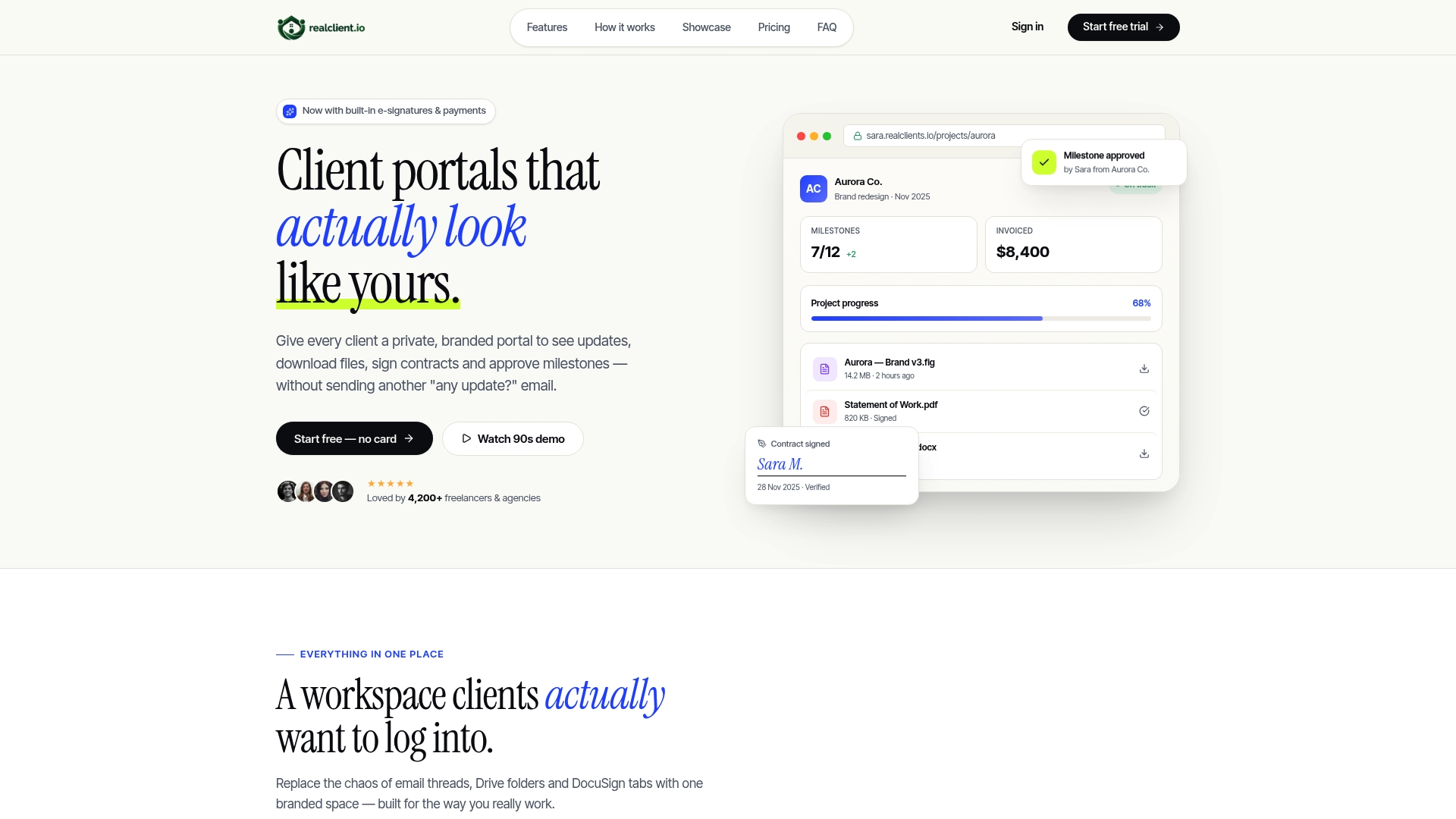
The practical difference: when your invoice, the contract authorizing it, and the payment link are all in the same portal, clients pay faster and ask fewer questions. Realclient has processed over $48 million in invoiced work through its portals, and the platform's security approach covers tokenized payment storage and access controls that keep client data protected. Check the Realclient pricing page to find the plan that fits your client volume, or visit Realclient to start a free trial today.
Sources
These sources were selected because they cover vendor setup guidance, U.S. accounting standards, and payment security references directly relevant to the workflows in this article. Each link goes to a primary or authoritative source, not a secondary summary.
Why these links: vendor documentation gives you the exact UI steps for your platform; the AICPA and ASC 606 references are the authoritative U.S. standards for security attestations and revenue recognition; the billing-system overviews cover the full automated workflow from scheduling through dunning.
- Recurring invoicing: What are recurring invoices?
- Automated billing systems explained | Stripe
- Recurring Invoices: Putting Steady Clients on Autopilot | Faster
This article is general information, not a substitute for advice from a qualified financial advisor. Consult a qualified financial professional about your own circumstances before acting on anything here.